Crust
Thinner, and cracked through
GRAIL put the Moon's crust at roughly 34 to 43 km on average, thinner than earlier estimates, and so fractured by ancient impacts that it reads as measurably porous.Wieczorek et al., Science, 2013
GRAIL did not photograph gravity. It felt it. As Ebb and Flow flew in formation, a mountain or a dense buried mass would tug the lead ship, then the trailing one. The gap between them stretched and shrank. A radio link measured that gap to within a single micrometer, thinner than a red blood cell.
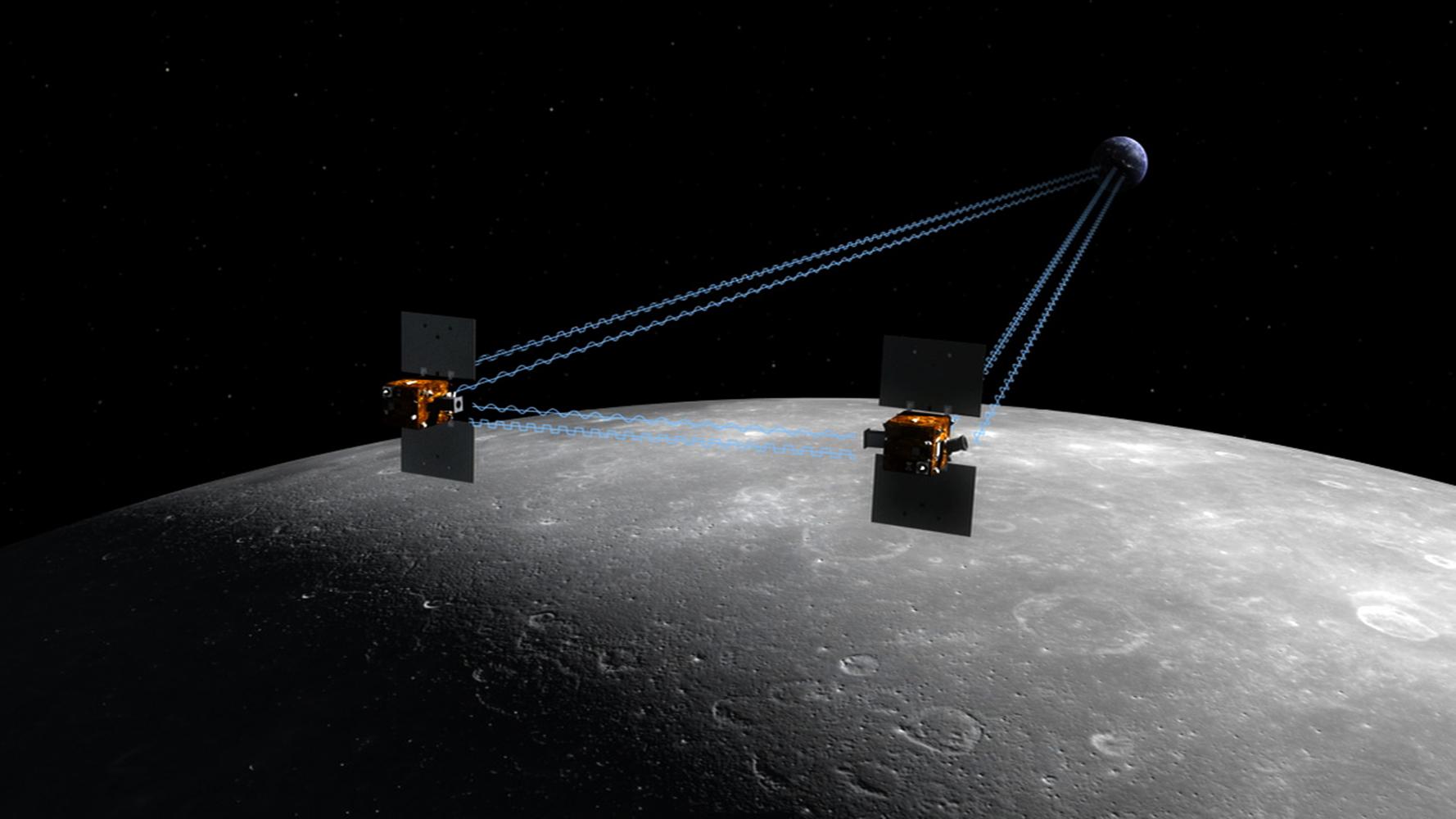
Fifteen months from a Florida launch pad to a deliberate crash near the lunar north pole. Tap any moment to open it.
Every figure here comes from NASA and the mission record.
The gravity map was never the goal. It was the instrument. Reading it revised what we thought we knew about the Moon.
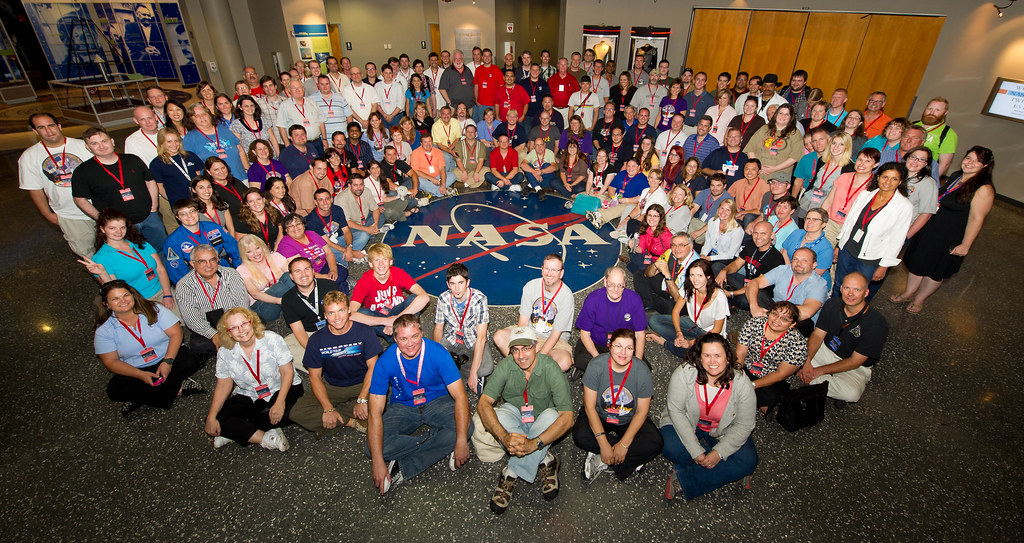
GRAIL was never only scientists. Days before launch, the public who traveled to Kennedy Space Center gathered around the NASA insignia for a photo. This is the same mission that would soon hand its cameras to classrooms.
Eighty seconds from Ebb's camera, silent, the surface sliding past. It had three days left. NASA/JPL-Caltech.
Their names were not chosen by scientists. Fourth-graders in Bozeman, Montana won a nationwide contest to name them. A mission built, from the very start, around kids who kept asking.